MEMBER BLOG: BeBOLD Marketing and Design
Written and submitted by Jordan Williams of BeBOLD Marketing and Design
Advancing Environmental Justice Through Sustainable Building
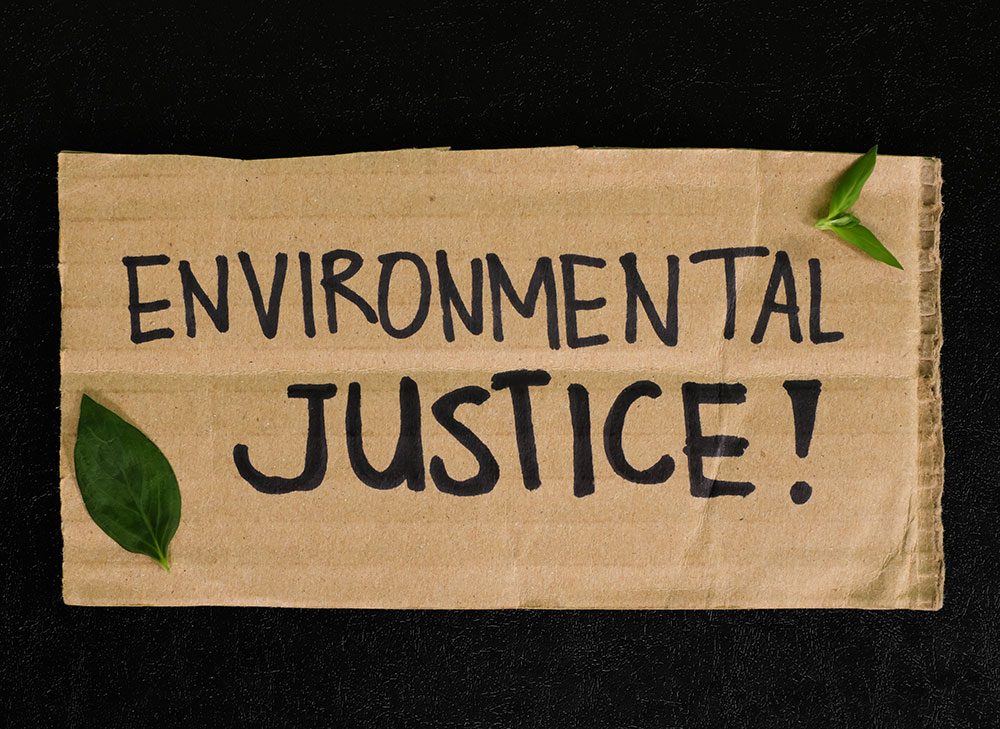
Tandem in the fight for a safe, clean environment is the advocacy for environmental justice, promoting diversity, equity, and inclusion for all people to have fair treatment and access to healthy living conditions. As communities become further involved, engaged, and educated in environmental justice, it’s crucial to understand the basics around what environmental justice is, its core principles, and the goals of the movement.
Uniting environmentalism and social justice, environmental justice aims to protect and defend both the environment itself and people. The movement isn’t just about how people and communities can fight the unjust policies and systems that destroy the physical environment, but also how we must understand and fight the policies and systems that keep marginalized communities disproportionately affected by unhealthy and toxic environmental conditions.
The modern environmental justice movement originated in the late 1960s, coinciding with the Civil Rights Movement and activists facing the reality that many Black Americans experienced severe health effects due to living and working in polluted and toxic areas. Two of the most influential early events in the movement included the 1968 Memphis Sanitation Strike, in which Black activists united to advocate for garbage workers’ improved working conditions amid unjust environmental systems, and the monumental 1982 Warren County protest, which gained national attention and inspired widespread research after Black activists protested a landfill in their community.
In the decades since, greater public and elected official awareness have spawned influential studies, council formations, policy efforts, and campaigns to research environmental injustice and fight against the systems, organizations, and projects that exacerbate such inequities. While crucial progress has been made for environmental justice, there’s still a long fight ahead.
Whether it’s grassroots campaigns, lobbying to politicians, or spreading awareness and education on environmental inequities, every contribution counts in this enduring fight. For those just getting involved in the movement, the best place to start with environmental justice can be through education on the phrases, laws, conditions, and systems closely associated with environmental injustice and the advocacy to combat its causes and effects.
Environmental Justice Terms & Definitions To Know:
- Environmental Justice: The idea that all people and communities have the right to live and thrive in safe, healthy environments with equal environmental protections and meaningful involvement in these actions. (The American Public Health Association)
- Redlining: A discriminatory practice that consists of the systematic denial of services such as mortgages, insurance loans, and other financial services to residents of certain areas, based on their race or ethnicity. Redlining disregards individual’s qualifications and creditworthiness to refuse such services, solely based on the residency of those individuals in minority neighborhoods; which were also quite often deemed “hazardous” or “dangerous.” (Legal Information Institute)
- Gentrification: A process in which a poor area (as of a city) experiences an influx of middle-class or wealthy people who renovate and rebuild homes and businesses and which often results in an increase in property values and the displacement of earlier, usually poorer residents. (Merriam-Webster Dictionary)
- Fair Treatment: The principle that no group of people, including a racial, ethnic or a socioeconomic group, should bear a disproportionate share of the negative environmental consequences from industrial, municipal and commercial operations or the execution of federal, state, local and tribal programs and policies. In implementing its programs, EPA has expanded the concept of fair treatment to include not only consideration of how burdens are distributed across all populations, but the distribution of benefits as well. (U.S. EPA)
- Low-Income: “Low-income” is defined as 80 percent of the median family income for the area, subject to adjustments for areas with unusually high or low incomes or housing costs. (U.S. Department of Housing and Urban Development)
- Meaningful Involvement: People have an opportunity to participate in decisions about activities that may affect their environment and/or health; The public’s contribution can influence the regulatory agency’s decision; Community concerns will be considered in the decision making process; and decision makers will seek out and facilitate the involvement of those potentially affected. (U.S. EPA)
- Overburdened Communities: The minority, low‐income, tribal and indigenous populations or communities in the United States that potentially experience disproportionate environmental harms and risks due to exposures or cumulative impacts or greater vulnerability to environmental hazards. (U.S. EPA)
- Affordable Housing: Housing on which the occupant is paying no more than 30 percent of gross income for housing costs, including utilities. (U.S. Dept. of Housing and Urban Development)
- Sustainability: To create and maintain the conditions under which humans and nature can exist in productive harmony to support present and future generations. (U.S. EPA)
No AI (artificial intelligence) was used to write, research, or edit this article. The massive energy consumption, increase in global greenhouse gas emissions, and water depletion generated by and required to sustain AI’s data centers pose a dangerous threat to the environment. Read more about the environmental costs of AI here.